

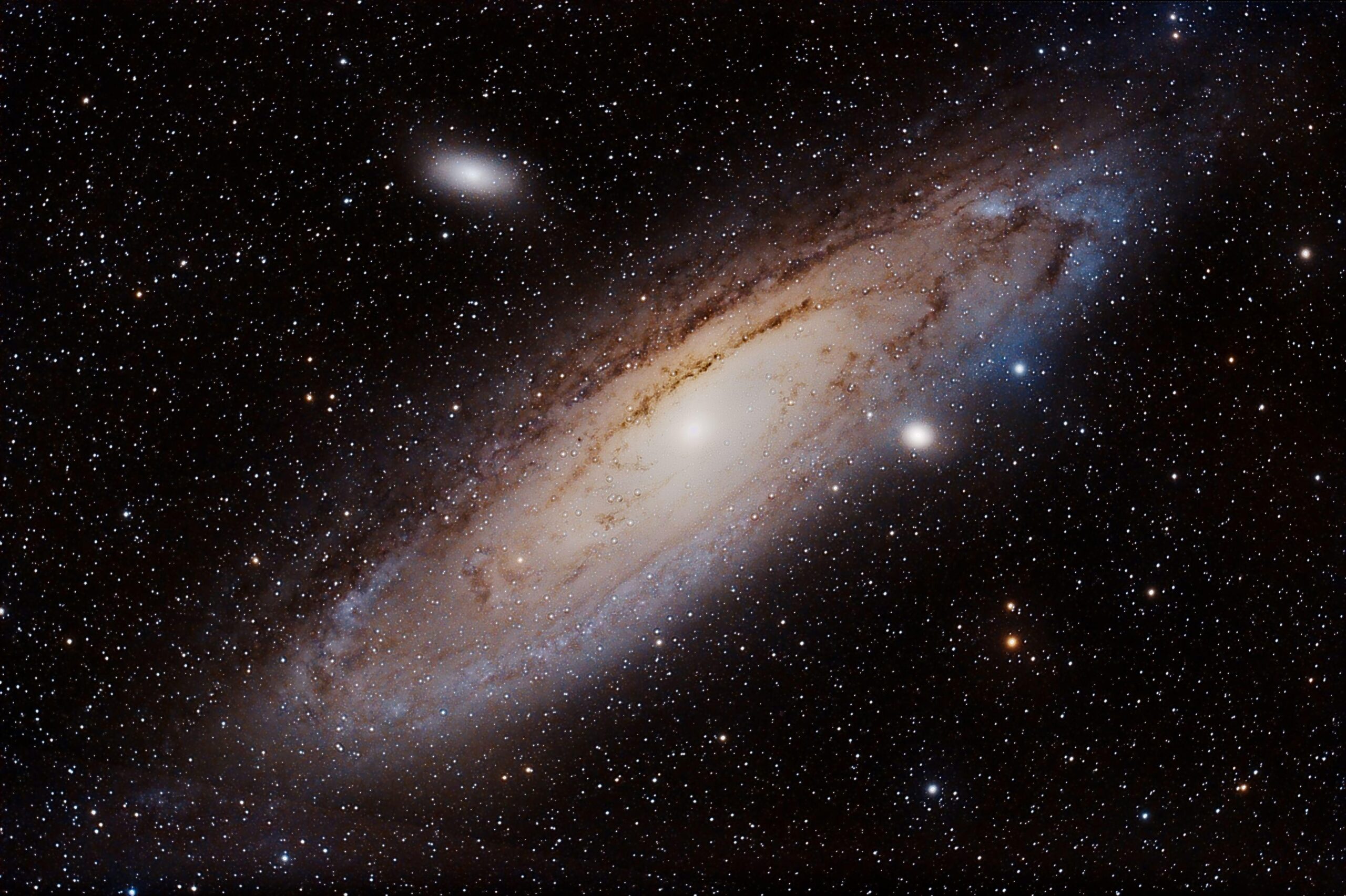
The Moon doesn’t have to ruin your deep sky imaging session. With the right targets, smart settings, and a few proven tricks, you can still capture impressive nebulae and galaxies—even under moonlit skies.
Yes, you can do deep sky imaging during the Moon. The key is controlling light pollution from moonlight by choosing the right objects, filters, timing, and exposure strategy. Moon phase and distance matter more than most people realize.
Why the Moon Makes Deep Sky Imaging Hard
Moonlight acts like natural light pollution. It brightens the sky background, washes out faint details, and reduces contrast—especially for broadband targets like galaxies.
Main challenges:
- Higher sky glow
- Lower signal-to-noise ratio
- Washed-out colors
- Harder post-processing
The good news? These problems are manageable.
Best Moon Phases for Deep Sky Imaging
Not all moon phases are equal.
- New Moon to First Quarter: Best time. Minimal impact.
- First Quarter to Gibbous: Still workable with filters and smart target choice.
- Full Moon: Difficult but not impossible—narrowband imaging shines here.
Pro tip: Moon distance from your target matters more than moon phase. Try to keep at least 60–90 degrees separation.
Choose the Right Targets (This Matters Most)
Best targets during moonlight
- Emission nebulae (e.g., Orion, Lagoon, Rosette)
- Planetary nebulae
- Supernova remnants
Targets to avoid
- Faint galaxies
- Reflection nebulae
- Dark nebulae
If it glows on its own, it’s usually moon-friendly.
Use Filters the Smart Way
Narrowband filters (best option)
- H-alpha
- OIII
- SII
These filters block most moonlight and let nebula signal through. They are ideal during bright Moon nights.
Light pollution filters
- Helpful under partial moonlight
- Limited effectiveness near Full Moon
Tip: Narrowband filters can turn a “lost night” into a productive one.
Adjust Your Camera Settings
Exposure length
- Shorter subs prevent washed-out backgrounds
- Let the histogram peak move slightly right—don’t clip highlights
Gain / ISO
- Moderate gain keeps noise under control
- Avoid max ISO; it rarely helps during moonlight
Number of frames
- More total integration time beats longer single exposures
Stacking is your best friend under bright skies.
Imaging Setup Tweaks That Help
- Use a dew shield or light shield to reduce glare
- Block stray light from nearby sources
- Keep optics clean—dust scatters moonlight
Small details add up fast.
Pros & Cons of Deep Sky Imaging During the Moon
| Pros | Cons |
|---|---|
| More usable nights | Lower contrast |
| Great for narrowband work | Harder processing |
| Builds imaging discipline | Not ideal for galaxies |
| Practice tracking & focus | Sky background rises fast |
Real-World Example
An astrophotographer images the Orion Nebula three days before Full Moon using an H-alpha filter. Each exposure is only 180 seconds, but they collect 4 hours of total data. After stacking and careful background extraction, the final image shows sharp structure and clean contrast—despite heavy moonlight.
The key wasn’t luck. It was planning.
FAQs (People Also Ask)
Can you do astrophotography during a Full Moon?
Yes. Narrowband imaging works very well during a Full Moon. Broadband targets are much harder.
What filter is best for moonlight astrophotography?
Narrowband filters, especially H-alpha, give the best results under bright moonlight.
How far should my target be from the Moon?
Aim for at least 60 degrees. More distance means less sky glow.
Is deep sky imaging worth it during the Moon?
Absolutely—if you choose the right targets and adjust your approach.
Final Verdict
Deep sky imaging during the Moon is not a waste of time—it’s a skill test. With smart target selection, narrowband filters, proper exposure control, and realistic expectations, moonlit nights can still produce excellent results.
Instead of waiting for perfect darkness, use the Moon to your advantage. Clear skies are too valuable to ignore.