

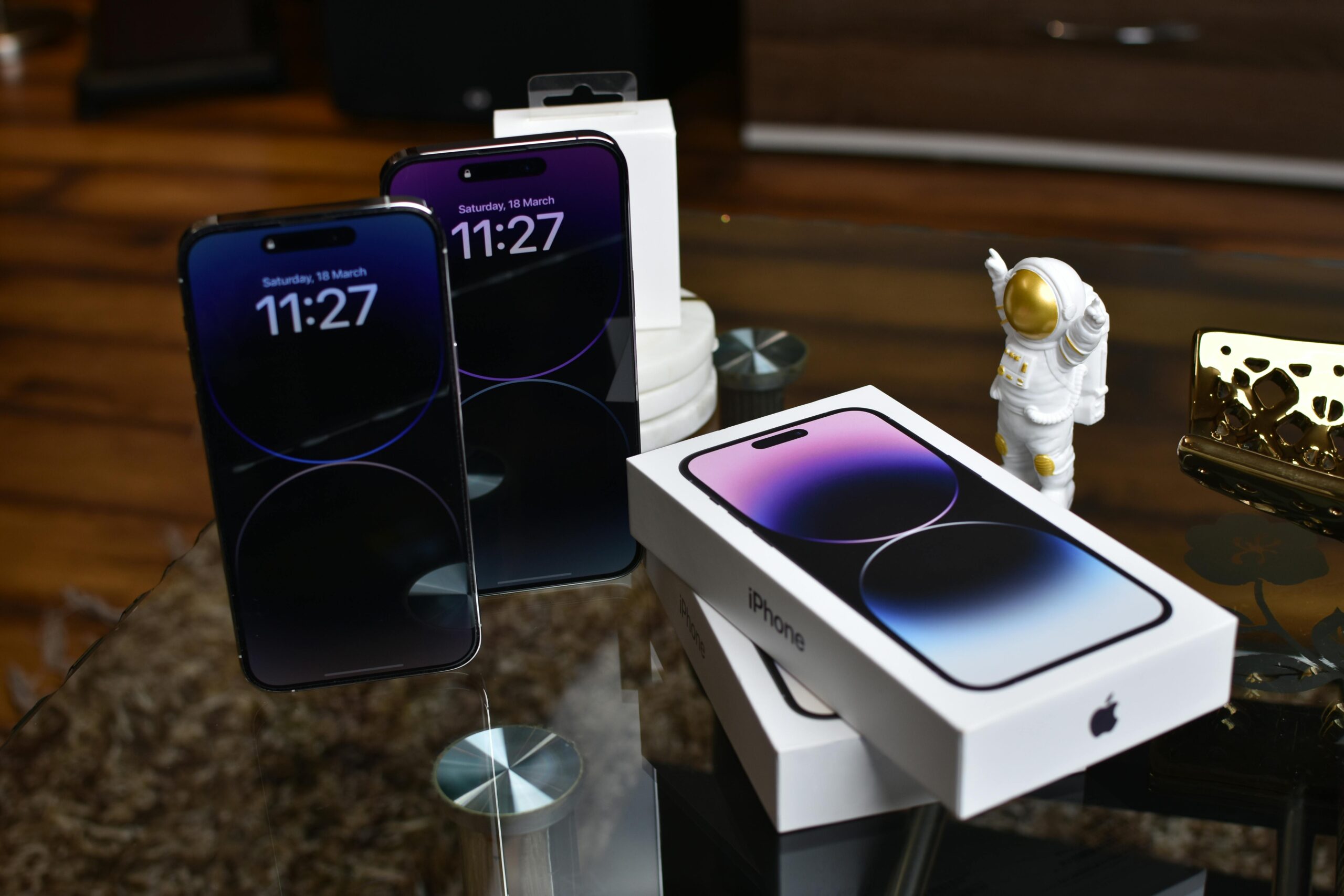
Right now, two of the most powerful smartphones ever made are available for purchase. In September 2025, the iPhone 17 Pro Max came out. The Galaxy S26 Ultra came out in March 2026. They both cost more than $1,200. They both say they are the best phone you can buy.
But they are based on very different ideas. Apple is betting on a cinematic video system, tight integration between hardware and software, and thermal engineering. Samsung is betting on display technology, camera megapixels, AI-powered tools, and the S Pen.
This comparison covers the main categories: design, display, camera, performance, battery, software, AI, and price. It gives real specs, real reviewer findings, and a clear conclusion at the end of each section—no extra space. No hedging. The only information you need to make the right choice.
Design and Build: They Both Went to Aluminum, but for Different Reasons
People are surprised to learn that both phones dropped titanium and went back to aluminum for 2026. But the reasons are different, and the results feel very different in your hand.
Build of the iPhone 17 Pro Max.
The iPhone 17 Pro Max has a unibody aluminum chassis, meaning the frame and internal structural parts are made from a single piece of metal rather than assembled from separate parts. This method improves heat distribution, which is important because the A19 Pro chip can get very hot when it has to do a lot of work, such as gaming or video editing.
The phone is 8.75 mm thick and weighs 233 grams. It is thicker and heavier than the one before it, and that is a planned trade-off. The extra space is needed for a bigger battery and the new vapor chamber cooling system. The front glass of the Ceramic Shield 2 is three times more scratch-resistant than the front glass of the last generation.
Apple has never offered such bold color options for the Pro Max before. You can get it in Cosmic Orange, Deep Blue, or Silver. CNN Underscored called the Cosmic Orange “a stunner.”
There is no physical SIM tray on the phone; it only uses eSIM. This isn’t a problem for most people in big markets. If you’re going to an area where eSIM use is still low, it’s a good idea to check before you buy.
Build of the Galaxy S26 Ultra
Samsung’s switch back to aluminum, which it calls “Armor Aluminum,” had two goals: to make the device lighter and more comfortable to hold and to help it cool down better. The S26 Ultra is 7.9mm thick and weighs 214 grams. That is a big step up from the S25 Ultra’s 218 grams and 8.2mm thickness. In real life, the phone is much easier to hold for long periods.
The slightly rounded corners are a small but real improvement. The S26 Ultra is available in six colors: Black, White, Sky Blue, Cobalt Violet, and Samsung. com-only colors Silver Shadow and Pink Gold.
The S Pen is still inside the body. If you use it often to take notes, draw, or make precise edits, having it can make a big difference in this comparison.
Design verdict: The S26 Ultra is more comfortable because it is lighter, thinner, and easier to hold with one hand. The iPhone 17 Pro Max wins for its structural feel. The unibody chassis feels more like a precision-machined object than a phone. Both are high-quality builds. The size of your hand and whether you use the S Pen will help you decide.
QHD+ and ProMotion OLED are both great displays, but there is one big difference between them.
Both phones feature a 6.9-inch OLED panel with a 120Hz adaptive refresh rate. Both of them look great. The differences are important, but neither phone is unusable.
Display for the iPhone 17 Pro Max
The Super Retina XDR OLED panel on the iPhone has the highest outdoor brightness of any iPhone at 3,000 nits. ProMotion technology dynamically switches the refresh rate from 1Hz to 120Hz, helping the battery last longer when the screen is showing static content.
The resolution is 2868 × 1320 pixels. This is lower than the S26 Ultra’s panel on paper, but you can’t see the difference at normal viewing distances. People say Apple’s display calibration is the best in the business because it delivers accurate colors, consistent white balance, and great viewing angles.
Display on the Galaxy S26 Ultra
The Dynamic AMOLED 2X panel from Samsung has a QHD+ resolution (3120 × 1440 pixels) and can reach 2,600 nits outdoors. When you read up close, the 1440p resolution makes the text noticeably sharper. The higher pixel density (500 ppi vs. about 460 ppi on the iPhone) is also easy to see when you put the two side by side.
The S26 Ultra’s best feature is its built-in Privacy Display, which is the first of its kind in the world. When turned on, it reduces the screen’s viewing angle so that anyone looking at it from the side sees a dark, unreadable screen, while the owner’s view from the front remains clear. You can make it turn on automatically when you type in passwords, use certain apps, or receive notifications. This is a real new idea, not just a gimmick, and it solves a real problem that people have every day.
TechRadar said the S26 Ultra’s screen is slightly dimmer than the S25 Ultra’s in some situations, but this is not a problem in normal use.
Display verdict: The Galaxy S26 Ultra wins because of its higher resolution and the truly new Privacy Display. The iPhone 17 Pro Max is better at peak brightness and color accuracy. The iPhone’s 3,000 nit ceiling gives it an edge if you spend a lot of time outside. Privacy Display is a great reason to switch to Samsung if you often use your phone in public places where sensitive information is on the screen.
Camera: The Biggest Difference Between These Two Phones
The iPhone 17 Pro Max and Galaxy S26 Ultra are very different when it comes to camera systems. This is because of how they are built, how they process data, and what kind of photographer each phone is meant to serve.
The Camera System on the iPhone 17 Pro Max
The main Fusion camera, the Ultra Wide camera, and a new Telephoto camera with 8× optical-quality zoom (up from 5× on the iPhone 16 Pro Max) are all part of Apple’s new camera system.
The new Telephoto is the main camera story for the 17 Pro. The camera has a 48 MP sensor and a tetraprism lens design, which is a prism-based optical folding system. This lets the camera crop the image while still achieving clear results at zoom levels between 1× and 8×. Reviewers liked how smooth the zoom range was and how good the 8× shots looked in good light. When you zoom in at 8× in low light, you get some noise and softness, which is normal for this focal length.
The front camera is an 18 MP Center Stage sensor with a square shape, letting the phone take selfies that are properly framed without turning the phone around.
Apple also added Dual Capture, which lets you record video from both the front and back of the camera simultaneously, and Apple Log 2 support for professional video workflows. The iPhone 17 Pro Max is the first smartphone to support Apple’s ProRes Log 2 codec, which delivers the best color grading quality after filming.
This generation took away the Night Portrait mode that came with the iPhone 12 Pro. That is a big mistake for portrait photographers who depended on it.
Camera System for the Galaxy S26 Ultra
Samsung does things differently. The S26 Ultra has the highest resolution of any flagship Android phone, with a 200-megapixel main sensor and a 50-megapixel Ultra Wide, a 10-megapixel 3× Telephoto, and a 50-megapixel 5× Telephoto.
The 2026 update is more about improving the aperture than adding more megapixels. The main camera now has an f/1.4 aperture, which is wider than before. This lets the sensor collect 47% more light than the S25 Ultra. The 5× telephoto lens also got a better aperture. The improvements are both aimed at improving the phone’s performance in low light, an area that has always been a competitive advantage for Samsung and Apple.
The Nightography video mode automatically changes settings in low light to keep colors bright and details clear. With the Photo Assist feature, you can use Galaxy AI to remove unwanted elements, add details back to images, reframe shots, and apply style effects, all of which will look natural.
Super Steady video uses real-time data from a gyroscope and accelerometer to lock the horizon and eliminate shaking as you move. This is really helpful for action and travel content.
Camera verdict: The iPhone 17 Pro Max is the better camera for professional photographers who want the best zoom range and video quality. It has 8× optical-quality zoom and ProRes Log 2 support. The Galaxy S26 Ultra’s 200 MP sensor and wider f/1.4 aperture make it better at capturing detail in low light and for a variety of situations. Both of these cameras are top-notch. This choice should be based on what you shoot the most.
Performance: A19 Pro vs. Snapdragon 8 Elite Gen 5
The chips in both phones are 3 nanometers wide and came out in 2025 and 2026. Both phones are very fast. You won’t be able to tell them apart in everyday use. The differences show up in how well they work over time, how efficiently they work, and in certain situations.
A19 Pro Performance
Apple’s A19 Pro chip is the fastest it has ever made. When combined with the new vapor chamber cooling system, it made a big difference in real-world performance compared to the iPhone 16 Pro. CNN reviewers played hard games like Death Stranding and said the phone worked well without the overheating issues the iPhone 16 Pro Max had.
The Geekbench 6 benchmarks put the iPhone 17 Pro and Pro Max at the top of the single-core rankings. This is because Apple’s chip design gives them an edge in raw CPU performance per core.
Instead of being a separate part, the vapor chamber is built right into the aluminum unibody frame. As a result, Apple says that the iPhone 16 Pro has 40% better long-term performance. The phone stayed cooler to the touch and handled heat better during long gaming and 4K video recording sessions than its predecessor.
How well the Snapdragon 8 Elite Gen 5 works
The Snapdragon 8 Elite Gen 5 “for Galaxy” version made by Samsung is the fastest Qualcomm chip you can buy in 2026. It improves the performance of the NPU (neural processing unit) for AI tasks, the GPU output for gaming and graphics rendering, and adds ray tracing support, which makes lighting effects look more realistic in compatible games.
The GSMArena review said the hardware upgrades in the S25 Ultra are real, but they are only small steps up from the Snapdragon 8 Elite. The phone stays cool and can handle tough tasks without slowing down, but reviewers said the upgrade was more of an evolution than a revolution.
Performance verdict: Both phones can handle anything you throw at them. Apple has a small advantage in raw CPU speed and keeping the temperature stable over time. Samsung’s GPU performance is the same, but its charging speed is faster (60W vs. 35W on the iPhone). You won’t be frustrated with either phone.
Apple’s battery life and charging times are now the same as Samsung’s.
Battery for the iPhone 17 Pro Max
The 17 Pro Max has a much bigger battery than the iPhone 16 Pro Max, which has about 4,400 mAh. The 17 Pro Max has about 5,088 mAh. Apple says that this iPhone has the longest battery life of any iPhone ever. Testing showed that it could play videos for up to 28 hours.
CNN’s reviewer used the iPhone 17 Pro Max as their main phone for months and said the battery life was “very impressive.” The 15% improvement over the previous generation is clear in everyday use, especially for heavy users who had to charge their phones in the middle of the day.
Charging is still a weak point for Samsung: it takes about 20 minutes to charge the phone from 0% to 50% with a wired connection. The MagSafe wireless charger works at 25W. There is no charger included.
Battery for the Galaxy S26 Ultra
The S26 Ultra still has the same 5,000 mAh battery as the S25 Ultra. Samsung’s main goal was to make charging faster, not bigger. Super Fast Charging 3.0 now supports wired charging up to 60W and wireless charging up to 25W, which is the same as the iPhone’s MagSafe.
The 60W wired charging is a real-world benefit that matters. Charging it all the way up at 60W takes about 65 to 70 minutes, while charging it all the way up on the iPhone takes closer to 100 minutes. You need a Power Delivery charger with PPS support that works with this device to get 60W speeds. This charger is not included in the box.
Battery verdict: The iPhone 17 Pro Max finally has battery life on par with other phones, a big improvement over previous models. At 60W, the Galaxy S26 Ultra charges a lot faster. Both phones are good at holding a charge if that’s the most important thing. Samsung is the clear winner if getting back to full charge quickly is more important to you.
Software and AI: iOS 26 with Apple Intelligence vs. Android 16 with Galaxy AI
Both platforms have invested heavily in AI on devices for 2026. They do things in different ways.
iOS 26 and Apple’s Smartness
Apple Intelligence is Apple’s built-in AI system that works with iOS 26 on the iPhone 17 Pro Max. It focuses on private, on-device processing for features like Writing Tools (rewriting, summarizing, and proofing text), Clean Up in Photos (removing objects), notification summaries, and a much more powerful Siri.
Apple’s privacy architecture is a real differentiator. Most of the Apple Intelligence features work only on the device. When the system needs more computing power, it uses Private Cloud Compute, Apple’s server-side AI system. Apple can’t see the data, though.
Android 16 with Galaxy AI and One UI 8.5
The Galaxy AI suite from Samsung is bigger and easier to see in the interface. The S26 Ultra has the following important features:
Now Brief is a daily summary of news, weather, tasks, and calendar items that fits on one screen.
Now Nudge —suggestions that are based on context, location, and usage patterns.
Photo Assist — AI-powered removal of objects, reframing, and style application
Audio Eraser — gets rid of or lowers background noise in recorded audio and video.
Live Interpreter — translation in real time for more than 20 languages
Privacy Display — AI-assisted automatic screen privacy management
Along with Bixby, Samsung also includes Gemini and Perplexity as AI assistant options. This gives users more ways to use the phone.
The S26 Ultra comes with Android 16 and One UI 8.5. Samsung promises up to 7 major Android updates, the best software support promise in the Android market.
Software verdict: iOS 26 wins for its privacy architecture and system-wide integration. Galaxy AI wins because it offers many features and is useful every day. Apple Intelligence is better for iPhone users who want a simpler, more private AI experience. Galaxy AI will be more useful for Samsung users who want more AI tools for more tasks, especially those that involve photography and productivity.
The S Pen is a feature that the iPhone doesn’t have.
The S Pen is built into the Galaxy S26 Ultra. It fits into the phone’s body, doesn’t need charging, and lets you write and draw with pressure sensitivity.
The S Pen is a must-have for people who take notes, draw, or use a stylus regularly. Samsung added it to the Galaxy S Ultra line with the S21 Ultra, and it is still one of the most obvious differences between the two phones.
No feature on the iPhone 17 Pro Max is the same. This one thing might be enough to end the comparison for you if you know you would use a stylus often.
The iPhone 17 Pro Max starts at $100 less and offers a 2TB option that Samsung doesn’t. The 1TB model of the Galaxy S26 Ultra has 16 GB of RAM, which is more than the 12 GB in lower models. This is a big deal for power users who run heavy AI workloads and do many things at once.
Carrier trade-in deals are common for both phones, which can significantly lower the actual cost. When it first came out, T-Mobile offered a free Galaxy S26 Ultra with an unlimited line and a trade-in.
Who Should Get the iPhone 17 Pro Max?
If you:
– Already own an Apple device, like a Mac, iPad, Apple Watch, or AirPods
– Use ProRes Log 2 and the new 8× Telephoto to shoot and edit professional videos. These are real professional tools.
– Want a battery that lasts the longest and can be relied on every day
– Make privacy a top priority in AI features. Apple Intelligence does most of its processing on the device.
– Want a software experience that is easier and more unified than one with more features
Who Should Get the Galaxy S26 Ultra?
If you want the Galaxy S26 Ultra, it makes the most sense if you:
– You use a stylus all the time, and the S Pen is a part of your work.
– Want the first Privacy Display in the world that is built in for public use
– Need to charge faster—60W wired is a big daily convenience benefit
– Want a phone that is lighter and thinner, so it is easier to hold with one hand
– Want more AI features in photography, productivity, and communication
– Want seven years of software updates and live in the Android ecosystem
The Final Verdict: The Truthful Answer
You can’t make a mistake here. Both phones are truly the best that their platforms have ever made.
The iPhone 17 Pro Max is better for making videos, handling heavy loads, and for people who live in Apple’s ecosystem. The A19 Pro chip with vapor chamber cooling fixed one of the biggest problems with the iPhone 16 Pro Max, and the battery life is now really good.
The Galaxy S26 Ultra is the better phone for people who want more tools at their fingertips, daily convenience, and versatility. It has a wider range of Galaxy AI features, 60W charging, an S Pen, and a Privacy Display, making it a better all-around device for work and public use.
If you’re trying to choose between these two right now, ask yourself this: Do you want to live in Apple’s world and shoot ProRes video, or do you want the S Pen and 60W charging in Samsung’s world? If you answer that honestly, the choice will be clear.