

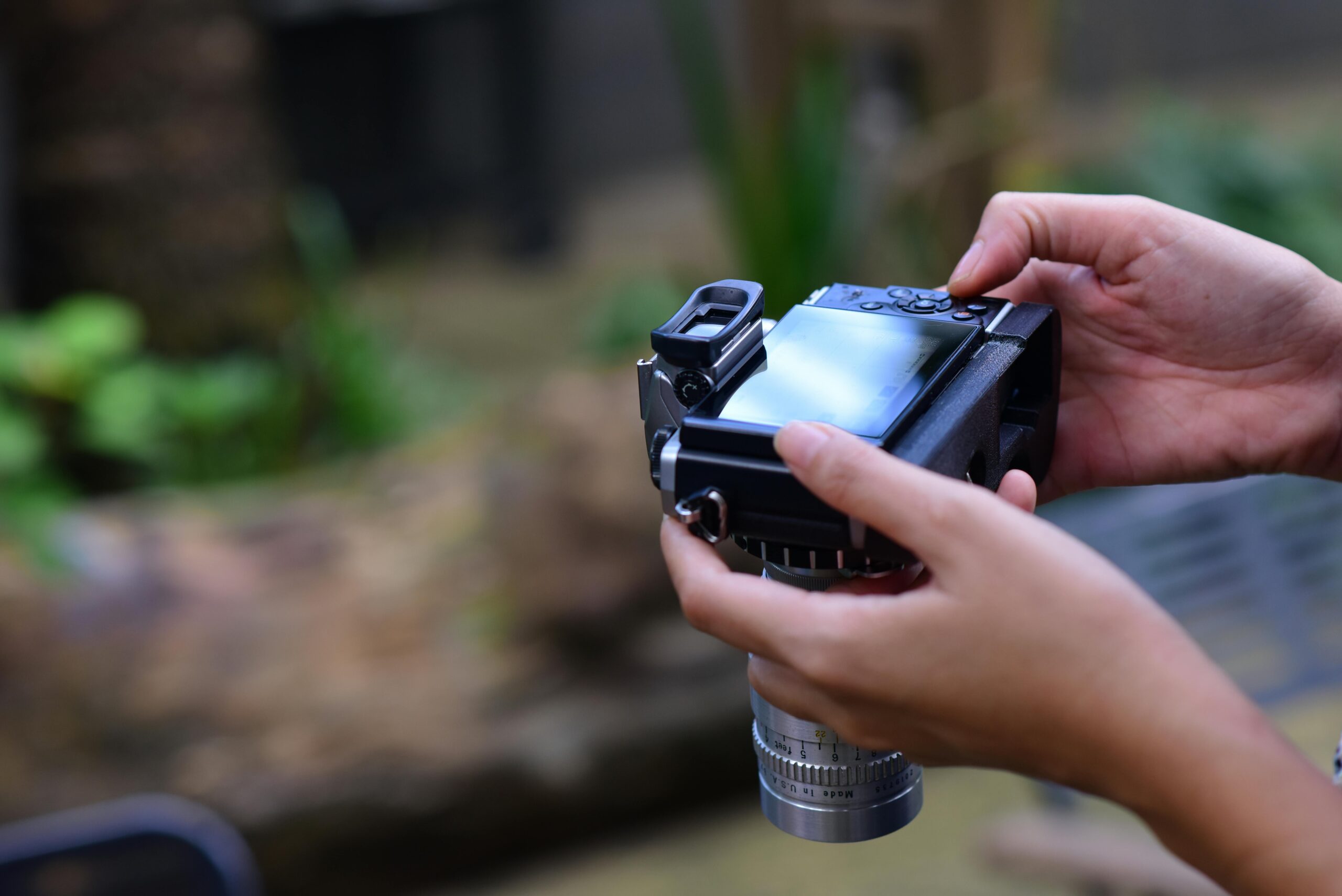
Technical camera occupy a specialized space in photography. They are built for precision control rather than speed, making them the preferred tools for architecture, product, and fine art work where accuracy matters more than convenience.
This guide explains how technical cameras work, the key movements they offer, lens choices, and where they are used in professional workflows.
What Is a Technical Camera?
A technical camera is a modular camera system that allows precise control over perspective, focus plane, and image geometry. Unlike standard DSLRs or mirrorless cameras, it separates key components:
- Front standard (lens)
- Rear standard (sensor or film back)
- Bellows or rail system connecting them
Core Purpose
- Control perspective distortion
- Adjust depth of field plane
- Capture high-resolution, distortion-free images
Expert Insight
Technical cameras are not designed for speed or automation. They are designed for control and accuracy.
Key Movements in Technical Cameras
Movements are what make technical cameras unique. They allow photographers to adjust the lens and sensor positions independently.
1. Tilt Movement
What It Does
Tilts the lens or sensor plane relative to the subject.
Effect
- Changes the plane of focus
- Allows more of the subject to be sharp without increasing aperture
Practical Use
- Product photography
- Landscape depth control
Expert Insight
Tilt uses the Scheimpflug principle to align focus with the subject plane.
2. Shift Movement
What It Does
Moves the lens or sensor parallel to the image plane.
Effect
- Corrects perspective distortion
- Keeps vertical lines straight
Practical Use
- Architectural photography
- Interior photography
3. Rise and Fall
What It Does
Moves the lens up (rise) or down (fall) without tilting the camera.
Effect
- Adjusts framing without distortion
- Maintains parallel lines
Practical Insight
Essential for photographing tall buildings without “leaning” effect.
4. Swing Movement
What It Does
Rotates the lens horizontally.
Effect
- Adjusts focus plane side-to-side
- Improves sharpness across angled subjects
5. Rotation
What It Does
Rotates the camera back or lens standard.
Effect
- Changes orientation
- Helps align movements with subject geometry
Why Movements Matter
Without movements, photographers rely on cropping or software correction. Technical cameras solve issues at the capture stage.
Benefits
- Higher image quality
- Reduced post-processing
- Accurate geometry
- Better control over depth
Lenses for Technical Cameras
Technical camera lenses differ from standard lenses.
1. Large Image Circle
- Covers a wider area than the sensor
- Allows room for movements without vignetting
Expert Insight
Image circle size determines how much shift or tilt you can apply.
2. Manual Focus Design
- Precision focusing
- No autofocus systems
3. High Optical Quality
- Minimal distortion
- Sharp edge-to-edge performance
Common Lens Types
- Wide-angle lenses (architecture)
- Standard lenses (product work)
- Macro lenses (detailed close-ups)
Leading Lens Brands
- Schneider Kreuznach
- Rodenstock
- Fujifilm (for large format systems)
Digital Backs and Sensors
Modern technical cameras often use digital backs.
Features
- Extremely high resolution
- Large sensor sizes
- Wide dynamic range
Practical Insight
These sensors capture fine details required for commercial and fine art photography.
Professional Uses of Technical Cameras
1. Architectural Photography
Why They Are Used
- Correct vertical lines
- Capture buildings accurately
- Avoid distortion
Example Use
- Real estate
- Urban documentation
- Commercial architecture
2. Product Photography
Benefits
- Precise focus control
- Perfect alignment
- High-detail output
Use Case
- Jewelry
- Watches
- Industrial products
3. Fine Art Photography
Advantages
- Creative control over focus plane
- High resolution for large prints
4. Reproduction Work
Applications
- Artwork scanning
- Museum archiving
- Document preservation
Expert Insight
Accuracy is critical in reproduction work, making technical cameras ideal.
Advantages of Technical Cameras
Precision Control
- Full control over perspective and focus
Image Quality
- Exceptional sharpness
- High-resolution output
Reduced Post-Processing
- Corrections made during capture
Flexibility
- Modular system allows customization
Limitations of Technical Cameras
Slow Operation
- Manual adjustments required
- Not suitable for fast shooting
High Cost
- Expensive bodies, lenses, and digital backs
Learning Curve
- Requires understanding of movements
- Not beginner-friendly
Limited Portability
- Bulkier than standard cameras
Technical Camera vs Tilt-Shift Lenses
Many photographers compare these two options.
Tilt-Shift Lenses
- Used on DSLR/mirrorless cameras
- Offer limited movements
- More portable
Technical Cameras
- Full movement control
- Higher precision
- Better for professional workflows
Practical Insight
Tilt-shift lenses are a simplified alternative, but they cannot match the flexibility of a technical camera.
Workflow Considerations
Using a technical camera involves a different workflow.
Setup Process
- Mount camera on tripod
- Compose frame
- Apply movements
- Adjust focus manually
- Capture image
Time Factor
Each shot takes longer, but results are more precise.
Who Should Use a Technical Camera?
Best suited for:
- Professional architectural photographers
- Product photographers
- Fine art photographers
- Commercial studios
Not ideal for:
- Casual photography
- Travel or street photography
- Fast-moving subjects
Maintenance and Handling
Keep Equipment Clean
- Dust affects image quality
Handle Movements Carefully
- Avoid forcing adjustments
Protect Lenses and Sensors
- Use proper storage and covers
Future Trends
Digital Integration
- Better software control
- Live preview improvements
Lighter Materials
- Improved portability
Hybrid Systems
- Combining technical camera precision with mirrorless convenience
Insider Insight
Technology is making technical cameras more accessible, but they will remain a niche tool for precision work.
Final Thoughts
Technical cameras are designed for photographers who need full control over perspective, focus, and image accuracy. They require time, skill, and investment, but deliver results that are difficult to achieve with standard camera systems.
Quick Checklist
- Understand camera movements
- Choose lenses with large image circles
- Use a stable tripod
- Plan shots carefully
- Expect slower workflow
- Focus on precision over speed
Conclusion
Technical cameras remain one of the most powerful tools in professional photography. Their ability to control perspective and focus at the capture stage makes them essential for industries where precision matters.
For those willing to learn and invest, they provide unmatched image control and quality.