

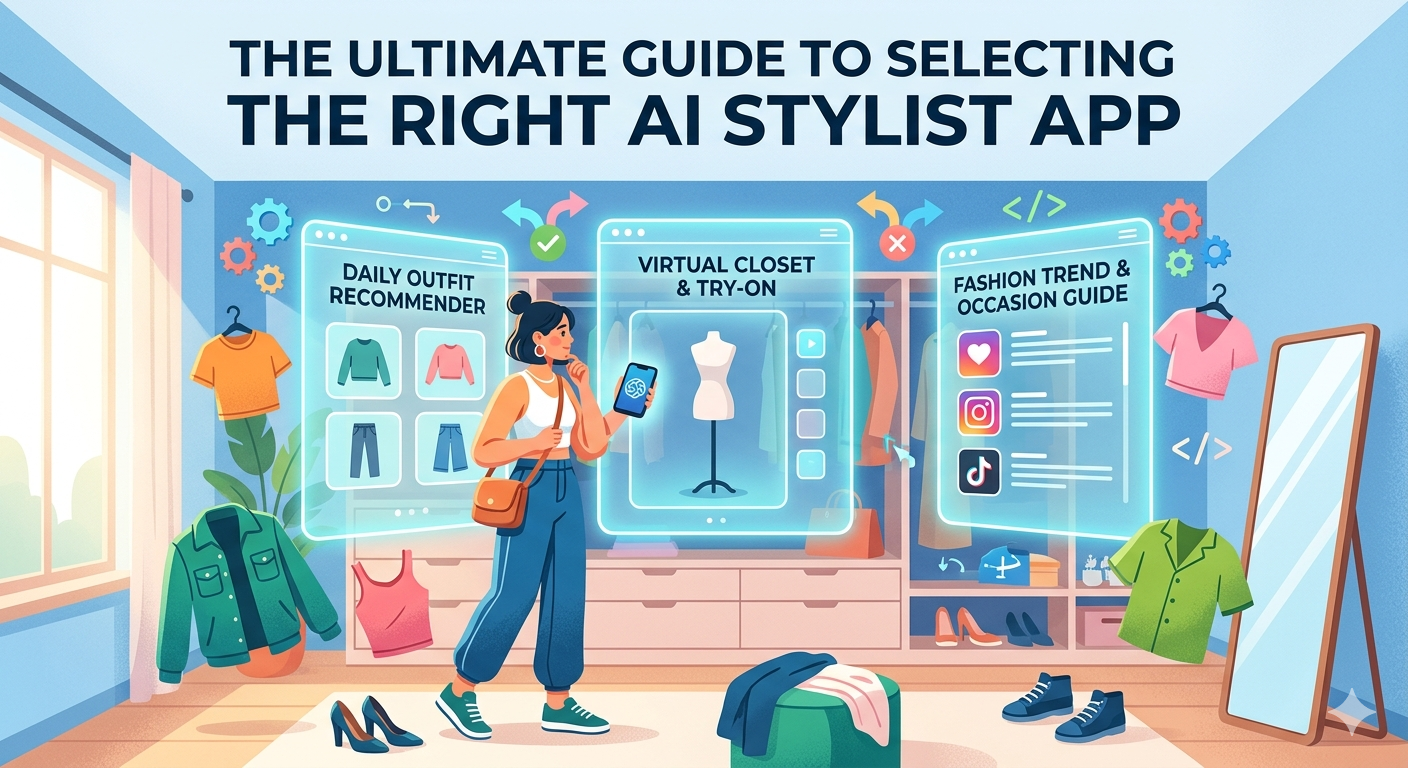
The confession most people make when they first try an AI stylist apps is the same: they stood in front of a perfectly adequate wardrobe, picked an outfit that felt wrong, changed three times, and left the house fifteen minutes late feeling vaguely defeated. Not because they lacked clothes. Because they lacked a system for thinking about what to wear — and a human stylist wasn’t exactly in the budget
That’s exactly the gap AI styling apps are rushing to fill in 2026, and the market has grown fast enough to be genuinely confusing. There are apps built around color analysis, apps that turn your wardrobe into a searchable digital closet, apps that let you virtually try on clothes before you buy them, and apps that combine human stylists with machine learning. Some are excellent. Some are frustratingly overpromised. And some are quietly brilliant for specific types of people while being nearly useless for others.
This guide is designed to help you figure out which category you fall into — and leave with a clear idea of what to download and what to skip.
What AI Stylist Apps Actually Are (And What They’re Not)
Let’s clear something up before diving in, because marketing language in this space has gotten impressively creative.
An AI stylist apps is software that uses machine learning, computer vision, and sometimes large language models to give you personalised fashion guidance. That guidance can take several forms: outfit recommendations built from your existing wardrobe, colour palette analysis based on your skin tone, virtual try-ons that superimpose clothing onto your image, or conversational advice you can ask questions to, the way you’d text a stylish friend.
What AI stylist apps are not, at this point, is a full replacement for a skilled human stylist. A professional stylist brings cultural nuance, decade-long intuition about body proportion and movement, knowledge of fabrics, and the kind of eye that only comes from dressing thousands of people. The apps are closing that gap — quickly — but anyone promising you a $10-per-month AI that rivals a Mayfair stylist is getting ahead of reality.
What they are is enormously useful for everyday decisions: what to wear to a specific event, how to get more outfits from the clothes you already own, whether a colour actually works with your skin tone, and how to stop buying pieces that never get worn because they don’t connect with anything else in your wardrobe.
In 2025, 47 million people used AI-powered fashion apps to plan their outfits. By the end of 2026, that number is projected to exceed 85 million — which tells you something important: this isn’t a niche experiment anymore. Ordinary people are integrating this technology into their daily routines and finding it genuinely useful.
How the Technology Actually Works
You don’t need to understand machine learning to use these apps well, but a basic grasp of what’s happening under the hood helps you use them more effectively — and have realistic expectations.
Most AI stylist apps combine several technologies:
Computer vision handles image analysis — identifying clothing items in your wardrobe photos, detecting colours and patterns, and recognising body shape from selfies. This is why photo quality matters so much in these apps. Better lighting and clearer images produce more accurate results.
Recommendation engines work similarly to what Netflix or Spotify use — they learn your preferences over time by tracking what you like, save, or reject, and weight future suggestions accordingly. The longer you use an app, the more calibrated it becomes to your specific taste.
Colour analysis algorithms use your skin tone, hair colour, and eye colour to map you to a seasonal colour palette — Winter, Spring, Summer, or Autumn — or to its sub-types. This is where many apps genuinely add value that most people couldn’t easily access before.
LLM-powered chat is newer and increasingly common — letting you ask the app natural-language questions like “what should I wear to an outdoor wedding in July?” and getting contextualised answers rather than generic templates.
The important thing to understand: these systems are only as good as the data you give them. An app that barely knows what’s in your wardrobe will give you generic suggestions. One you’ve trained properly — with accurate photos, complete preference profiles, and honest feedback on suggestions — can be surprisingly useful.
The Seven Features That Actually Matter
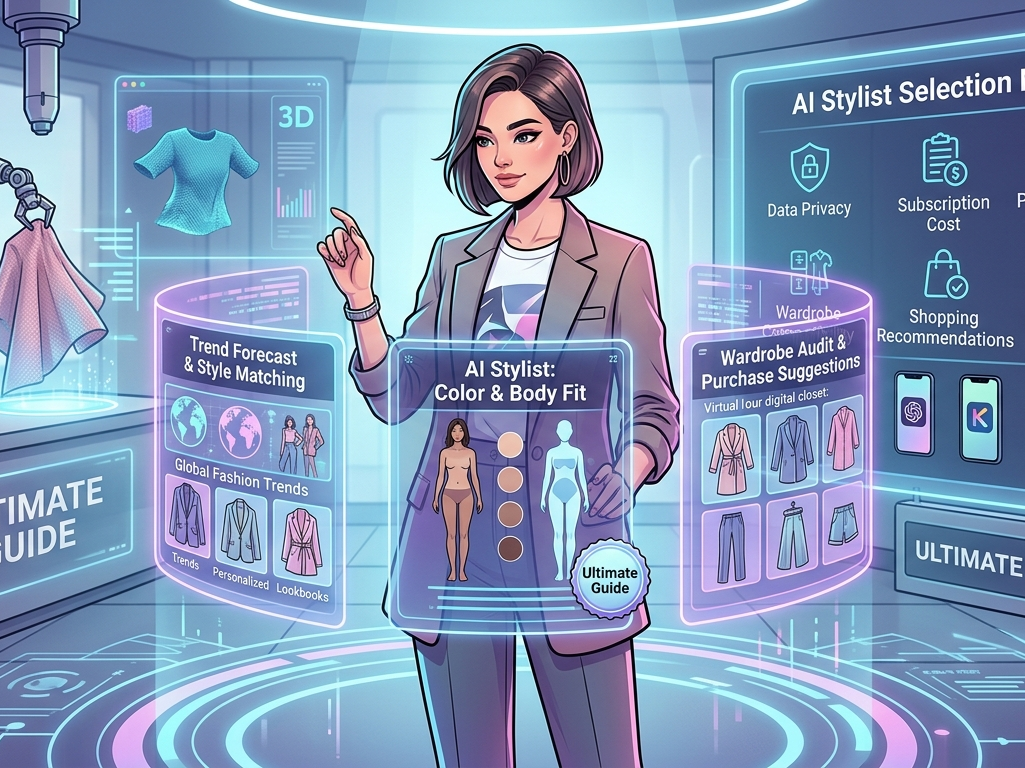
Walk into any AI stylist app’s feature list and you’ll find impressive-sounding capabilities. Here’s how to sort the genuinely useful from the ones that look good in a screenshot but rarely change your daily life.
1. Personalisation Depth
The difference between an app that asks you five style questions at setup and one that builds a genuine ongoing model of your preferences is enormous. Look for apps that continuously refine their understanding based on what you engage with — not just a one-time profile.
2. Wardrobe Integration
Can the app actually see your clothes? Apps that generate outfit suggestions from a database of generic items are far less useful than ones that work with what you actually own. The best wardrobe-integrated apps use AI to automatically tag and categorise items when you photograph them.
3. Colour Analysis Quality
Colour analysis is one of the highest-value things these apps can offer — knowing which colour families genuinely flatter your colouring prevents a lot of expensive mistakes. But the quality varies dramatically. Look for apps that go beyond “cool/warm” into seasonal sub-types and provide actual palette examples.
4. Virtual Try-On Accuracy
Virtual try-on lets you test combinations, experiment with styles, and avoid wasting money on pieces that don’t work. But the technology ranges from convincingly realistic to obviously artificial. Try the feature in a free trial before committing — the gap between the best and worst implementations is significant.
5. Occasion-Awareness
A styling app that gives you the same suggestions regardless of whether you’re dressing for a job interview, a first date, or a Saturday supermarket run isn’t very useful. Occasion-specific recommendations — ideally factoring in weather and location — are a meaningful differentiator.
6. Shopping Integration Quality
Many apps earn revenue through affiliate shopping links. That’s fine in principle, but the execution varies widely. Some apps surface quality, relevant recommendations that expand your wardrobe thoughtfully. Others — and this is worth checking user reviews for — push low-quality fast fashion regardless of your stated preferences. One common user complaint is that outfit links lead exclusively to Amazon or Shein polyester regardless of the style preferences submitted.
7. Privacy and Data Practices
You’re handing these apps a lot of personal visual data — photos of your face, your body, your home. Read the privacy policy before committing, particularly around how photos are stored, whether data is sold to third parties, and what happens to your information if you cancel.
Comparing Popular AI Stylist Apps: Honest Pros, Real Cons
Dressly
Dressly positions itself as a comprehensive AI personal stylist with colour analysis, body scanning, virtual try-on, and an outfit scanner at its core.
The AI Outfit Scanner works like a real-time fashion AI advisor where you can scan your outfit, and it instantly analyses it, telling you what works, what doesn’t, and what to change or improve. For in-store shopping specifically, this is genuinely transformative — try something on, scan it, get immediate feedback before buying.
The app gives personalised style suggestions based on body type, eye colour, and lifestyle, and supports users around the clock from navigating tricky dress codes to simply lifting their mood with thoughtful guidance.
What users love: The colour analysis feature, the interactive onboarding, and the virtual try-on when it works well.
Where it falls short: The mixed reviews here are worth taking seriously. Some users report that outfit selections don’t genuinely reflect the profile preferences submitted, and that additional charges for features like colour analysis aren’t clearly communicated upfront. The core promise of a fully built capsule wardrobe requires significant engagement over weeks, and the level of automation versus user involvement varies from expectations set by advertising.
Best for: Users who want a one-app approach to colour analysis and outfit scanning, and who are willing to engage with the platform consistently to train the AI.
Pricing: Subscription-based; colour analysis and some features involve additional charges — read the pricing page carefully before subscribing.
Whering
Whering takes a different philosophical approach. Where Dressly is about styling you, Whering is fundamentally about helping you understand what you already own — and make more conscious decisions about what you buy next.
Often described as the “Clueless wardrobe for Gen Z,” Whering helps users digitise their closets and plan sustainable outfits with features including a digital wardrobe builder, outfit calendar, cost-per-wear tracking, and AI outfit suggestions.
It works out how much each garment has cost you per use — a £200 coat worn 100 times costs £2 per wear; a £40 dress worn twice costs £20 — and it genuinely reframes how you think about purchases.
What users love: Sustainability features and cost-per-wear tracking that are unmatched in the category. The app is also free to use for core features, which removes the commitment pressure.
Where it falls short: Outfit generation is basic compared to apps with stronger AI engines. It’s a wardrobe management platform with light styling rather than a styling app with wardrobe management. If you want genuinely creative outfit suggestions, Whering won’t satisfy that need.
Best for: Sustainability-conscious users, data-driven dressers who want to understand their wardrobe patterns, and anyone trying to stop buying clothes they don’t wear.
Pricing: Free with most features; Premium at approximately £6.99/month for advanced analytics.
Indyx
Indyx occupies a unique and genuinely differentiated position: it’s the only major app that combines AI wardrobe management with access to real human stylists in the same platform.
Indyx’s mission is to unlock the potential of what you already own, made possible through digital cataloging and human personal styling in one place — the only platform that combines both.
The wardrobe digitisation is exceptional. Photograph items or forward purchase receipt emails to automatically add to your digital closet. AI removes backgrounds, categorises items, and tracks everything through an analytics dashboard showing wear frequency, cost-per-wear, and wardrobe gaps.
The human stylist layer is where Indyx becomes genuinely distinctive. You can book sessions with professional stylists who work with your actual wardrobe — not a generic lookbook — to create personalised lookbooks.
What users love: The quality of wardrobe digitisation, the cleanliness of the interface, and the option to escalate from AI suggestions to a human stylist when you want something more considered.
Where it falls short: The human styling sessions come at an additional cost (sessions start around £100-150), which moves it out of impulse-purchase territory. The AI suggestions alone are good but not the strongest in the category — Indyx’s real advantage is the hybrid model.
Best for: Users serious about their wardrobe who want the option of professional human input, and data-oriented dressers who want comprehensive analytics.
Pricing: Free app; Insider membership for premium analytics; human styling sessions priced separately.
TryDrobe
TryDrobe focuses on visual styling workflows — if you’re a visual thinker who needs to see outfits rather than read about them, it’s built for that brain. It is the best overall AI stylist for a visual styling workflow with digital closet organization, outfit planning, and virtual try-on.
The virtual try-on quality is among the best currently available in the category, which matters enormously for the use case of evaluating potential purchases before committing.
Best for: Visual thinkers, online shoppers who want to reduce returns, and anyone for whom “see it to believe it” is genuinely how style decisions work.
Alta
Alta takes a conversational approach — it’s built around chat rather than visual interfaces, which makes it accessible in a completely different way.
It is the best fit if you think of an AI stylist as a conversation. It is built around asking questions, getting outfit direction, and refining recommendations through chat — making it approachable for users who do not want to build a detailed closet or learn a complex interface before getting value.
The limitation is the mirror image of the strength: chat can only go so far when the decision is visual. If you need to see how a garment looks on your body, or want a full closet-planning workflow, a visual-first app will be stronger.
Best for: Beginners who want to ease into AI styling without building a full wardrobe digitisation project, and users who prefer text-based guidance over visual interfaces.
Making the Right Choice: A Framework for Your Decision
The mistake most people make is downloading the app with the best marketing and then wondering why it doesn’t feel right. The better approach is to get honest with yourself about one question first: what decision do I most want help with? If your problem is
“Don’t know what to wear with what I own”: Start with Indyx or Whering to digitise your wardrobe properly, then use their AI suggestions as a starting point.
“Buy things that don’t work with my colouring”: Dressly’s colour analysis or Style DNA’s body-and-colour profile approach directly addresses this.
“Just want to ask someone what to wear”: Alta’s conversational model is the lowest-friction entry point.
If sustainability is core to your motivation: Whering’s cost-per-wear tracking and conscious consumption tools are unmatched.
Budget Considerations
Most of these apps operate on a freemium model — a usable free tier that unlocks value immediately, with premium features behind a monthly or annual subscription. Before paying for anything:
Try the free tier for at least two weeks. AI styling apps need time and data to calibrate — a three-day trial doesn’t fairly represent what a properly trained app can do.
Annual subscriptions are almost always significantly cheaper than monthly ones, but only commit after you’ve confirmed the free tier works for you.
Watch for hidden upsells. As Dressly’s user reviews make clear, some apps have additional charges for features that appear to be part of the main product — read the pricing page thoroughly before entering payment details.
Frequently Asked Questions
Do AI stylist apps actually work, or are they just novelty?
They genuinely work for specific use cases — colour analysis, wardrobe digitisation, reducing decision fatigue, and evaluating potential purchases. They’re less reliable for highly nuanced situations requiring deep knowledge of your lifestyle, body, and personal history. The technology is improving quickly; apps that felt gimmicky in 2023 are now delivering genuinely useful daily guidance for millions of people.
Are these apps safe for my personal data?
It varies by platform. Apps requiring face photos or body images should be evaluated carefully — check whether images are processed locally or uploaded to servers, how long data is retained, and whether it’s used for training purposes. Established apps with clear privacy policies are safer bets than new entrants with vague data practices.
Can men use AI stylist apps effectively?
Yes, though the market has historically skewed toward women. Apps like Lookastic, Acloset, and Beauty AI include strong men’s styling functionality. The wardrobe-digitisation apps (Indyx, Whering) are gender-neutral by design.
How long does it take for an AI stylist app to get genuinely useful?
Expect two to four weeks of regular engagement before recommendations start feeling truly personalised. Apps learn from your feedback — what you like, save, skip, and rate — and that calibration takes time. Treat the first month as a training period rather than an immediate payoff.
Is a subscription worth it over just browsing Pinterest for style inspiration?
Pinterest gives you inspiration. An AI stylist app gives you a system — one that connects inspiration to your actual wardrobe and your specific body and colouring. If you spend significant time figuring out what to wear or making purchases you regret, the time and money saved by a well-chosen app can easily exceed the subscription cost.
Where This Category Is Heading
The most significant near-term development is the improvement of virtual try-on technology. Current implementations are good enough to be useful; within 18 to 24 months, they’re likely to be accurate enough to meaningfully reduce both purchase anxiety and return rates — which has significant implications for how people shop online.
The hybrid AI-plus-human stylist model that Indyx pioneered is spreading. Expect more apps to offer tiered access: AI suggestions at the base, access to trained human stylists for high-stakes decisions at a premium. This model makes sense because it meets users at different points of their styling journey.
AI stylist apps are evolving very fast, with quality improving steadily — and the trajectory strongly suggests they’ll continue closing the gap with human styling expertise over the coming years.
The sustainability angle is also deepening. As regulatory and consumer pressure on fast fashion increases, apps that help people extract more value from what they own — rather than driving more purchasing — are finding a larger and more committed audience. Cost-per-wear tracking might sound like a novelty feature today; in three years it may be as standard as a weather widget.
Conclusion
There’s a version of this guide that ends with a single recommendation and a bold declaration that one app rules them all. But honestly, that would be doing you a disservice.
The right AI stylist app is less about which one is objectively best and more about which one solves your specific, honest problem. Someone who spends £50 a month on clothes they never wear needs different tools than someone whose wardrobe is actually fine but who loses twenty minutes every morning to decision paralysis. A sustainability-motivated minimalist needs different features than someone who loves experimenting with colour and wants to do it more confidently.
What’s clear is that the technology has matured past the novelty stage. These apps aren’t party tricks or digital horoscopes. The best ones — used consistently and given enough time to calibrate — produce real outcomes: fewer regretted purchases, more creative outfit combinations from existing clothes, and a clearer sense of what actually works for your body and colouring rather than whoever’s in the lookbook.
Start with the free tier of the app that most closely matches your actual problem. Spend a month training it properly. Then decide whether the premium subscription earns its cost. That’s a lower-risk path to genuinely useful results than committing based on screenshots and marketing promises.
Your wardrobe already knows what you need. A good AI stylist app is just the translator.
Research for this guide draws on user reviews from Trustpilot and the App Store, hands-on testing reports from Klodsy, TryDrobe, and BeautyAI, and category analysis from Droid on Roids and Nouva, verified as of June 2026.