

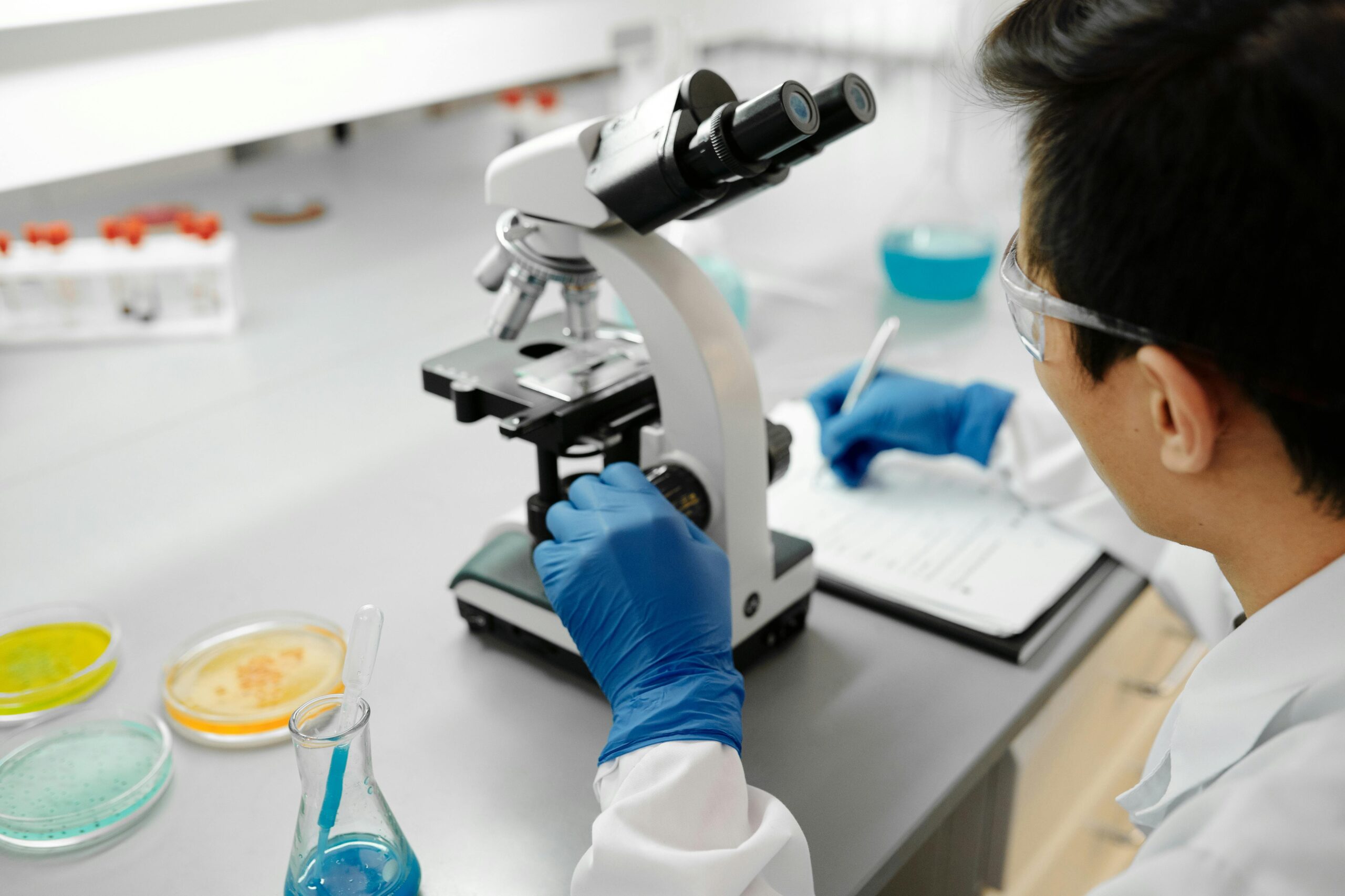
Scientific discovery often moves forward in very small steps—sometimes literally. In modern laboratories, progress increasingly depends on the ability to control tiny volumes of liquid with extreme accuracy. One of the most important technologies enabling this precision is picoliter dispensing.
Picoliter dispensing allows researchers to handle liquid volumes as small as one trillionth of a liter. That level of control was almost impossible a few decades ago. Today, it is transforming how scientists design experiments, reduce waste, improve accuracy, and accelerate innovation across many research fields.
This article explains what picoliter dispensing is, why it matters, and how it is advancing scientific research. The goal is to provide a clear, expert-level explanation using simple, human-friendly language—without fluff or vague claims.
Understanding Picoliter Dispensing
What Is a Picoliter?
A picoliter (pL) is an extremely small unit of volume.
To put it into perspective:
- 1 liter = 1,000 milliliters
- 1 milliliter = 1,000 microliters
- 1 microliter = 1,000 nanoliters
- 1 nanoliter = 1,000 picoliters
That means one picoliter is one trillionth of a liter.
Handling such small amounts requires specialized tools designed for accuracy, repeatability, and control.
What Does Picoliter Dispensing Mean?
Picoliter dispensing is the controlled delivery of liquid droplets in the picoliter range. These droplets can be placed:
- Onto microplates
- Into wells or channels
- On sensor surfaces
- Into biological samples
The key is not just small volume, but precision and consistency. Researchers need to dispense the same tiny amount over and over again without variation.
Why Picoliter Accuracy Matters in Research
In many experiments, volume errors directly affect results. When working with costly reagents, rare samples, or living cells, even small mistakes can:
- Skew data
- Reduce reproducibility
- Increase costs
- Waste valuable materials
Picoliter dispensing helps solve these problems by offering:
- High accuracy
- Minimal sample usage
- Better control over experimental conditions
How Picoliter Dispensing Works
Core Dispensing Technologies
There are several main methods used to dispense picoliter volumes. Each has strengths depending on the application.
1. Piezoelectric Dispensing
This method uses electrical signals to deform a piezo element, pushing out a tiny droplet of liquid. It is:
- Highly accurate
- Fast
- Common in biological and chemical research
2. Acoustic Droplet Ejection
Sound waves are used to eject droplets from a liquid surface without direct contact. This method:
- Eliminates contamination risk
- Works well with sensitive samples
- Allows non-contact dispensing
3. Thermal Inkjet-Based Dispensing
Heat creates a small vapor bubble that forces liquid out of a nozzle. While effective, it is mainly used when heat-sensitive samples are not involved.
Key Features of Modern Picoliter Systems
Advanced dispensing systems offer:
- Real-time volume monitoring
- Automated calibration
- High-throughput operation
- Software-controlled accuracy
These features help researchers focus on science instead of manual pipetting errors.
Why Picoliter Dispensing Is Transforming Scientific Research
1. Improved Experimental Precision
Precision is the foundation of reliable science. Picoliter dispensing reduces variability caused by human handling.
Benefits include:
- Consistent droplet size
- Accurate reagent ratios
- Better repeatability across experiments
This precision is especially important in fields like genomics, proteomics, and drug discovery.
2. Reduced Reagent and Sample Waste
Many research materials are:
- Expensive
- Hard to source
- Available only in small quantities
Using picoliter volumes allows scientists to:
- Run more experiments with less material
- Lower overall research costs
- Preserve rare biological samples
Over time, this efficiency can save laboratories significant budgets.
3. Higher Throughput Without Sacrificing Quality
Modern research often requires thousands or even millions of tests. Picoliter dispensing supports high-throughput workflows by:
- Automating liquid handling
- Reducing manual intervention
- Maintaining consistent quality
This balance between speed and accuracy is critical in large-scale studies.
Applications of Picoliter Dispensing in Scientific Research
Picoliter Dispensing in Drug Discovery
Faster Screening of Drug Candidates
Drug discovery depends on screening massive chemical libraries. Picoliter dispensing enables:
- Ultra-small reaction volumes
- Parallel testing of thousands of compounds
- Faster identification of promising candidates
Smaller volumes also reduce chemical waste and exposure risks.
Better Dose-Response Studies
Precise volume control allows researchers to:
- Create accurate concentration gradients
- Test subtle dose changes
- Generate more reliable toxicity data
This leads to better decision-making early in development.
Advancing Genomics and Molecular Biology
DNA and RNA Handling
Genomic research often involves very small amounts of nucleic acids. Picoliter dispensing supports:
- Accurate DNA amplification
- Consistent sample preparation
- Reduced contamination risks
This improves sequencing quality and data reliability.
Single-Cell Analysis
Single-cell studies require extreme sensitivity. Picoliter-scale control makes it possible to:
- Isolate individual cells
- Deliver precise reagents
- Analyze cellular behavior with minimal interference
This has opened new doors in cancer research and developmental biology.
Proteomics and Enzyme Research
Proteins and enzymes are often unstable and expensive. Picoliter dispensing helps by:
- Minimizing exposure to degrading conditions
- Allowing controlled reaction setups
- Supporting complex enzyme kinetics studies
As a result, researchers gain clearer insights into protein function.
Picoliter Dispensing in Diagnostic Research
Improved Assay Sensitivity
Many diagnostic assays depend on precise reagent placement. Picoliter dispensing:
- Enhances signal consistency
- Reduces background noise
- Improves detection limits
This is especially useful in early disease detection research.
Development of Lab-on-a-Chip Systems
Microfluidic devices rely on extremely small volumes. Picoliter dispensing integrates naturally with:
- Miniaturized diagnostic platforms
- Portable testing devices
- Point-of-care research tools
These technologies are shaping the future of diagnostics.
Role in Materials Science and Nanotechnology
Precision Coating and Patterning
In materials research, even slight variations can change performance. Picoliter dispensing enables:
- Controlled deposition of inks or polymers
- Precise surface patterning
- Uniform thin-film creation
This is critical in electronics, sensors, and energy research.
Supporting Nanomaterial Development
Nanomaterials require strict control over composition. Picoliter-scale dispensing allows:
- Accurate mixing of nanoparticles
- Consistent experimental conditions
- Repeatable fabrication processes
This improves reliability and scalability.
Improving Reproducibility in Research
Addressing the Reproducibility Challenge
One of the biggest challenges in science today is reproducibility. Picoliter dispensing helps by:
- Standardizing liquid handling
- Reducing operator variability
- Automating critical steps
This leads to data that other labs can verify and build upon.
Supporting Better Data Integrity
Consistent dispensing improves:
- Experimental transparency
- Statistical confidence
- Peer-review trust
As a result, research outcomes become more credible.
Cost Efficiency and Sustainability Benefits
Lower Operating Costs Over Time
While advanced dispensing systems require upfront investment, they often reduce long-term costs by:
- Saving reagents
- Reducing repeat experiments
- Increasing lab productivity
For many institutions, the return on investment is clear.
Supporting Sustainable Research Practices
Using smaller volumes means:
- Less chemical waste
- Lower disposal costs
- Reduced environmental impact
This aligns with growing sustainability goals in scientific research.
Challenges and Limitations of Picoliter Dispensing
Technical Complexity
Operating picoliter systems requires:
- Proper training
- Regular calibration
- Maintenance expertise
Without this, performance can suffer.
Compatibility with Different Liquids
Some liquids are difficult to dispense due to:
- High viscosity
- Surface tension differences
- Particulate content
Ongoing innovation continues to address these limitations.
Initial Cost Considerations
Advanced systems can be expensive. Smaller labs may face budget constraints, although shared facilities and service models are helping bridge this gap.
Future Trends in Picoliter Dispensing Technology
Integration with Artificial Intelligence
AI-driven control systems are improving:
- Droplet accuracy
- Error detection
- Adaptive dispensing strategies
This makes systems smarter and easier to use.
Greater Automation and Miniaturization
Future systems are expected to:
- Take up less lab space
- Require less manual setup
- Integrate seamlessly with robotic platforms
This will further streamline research workflows.
Expansion into New Research Fields
As technology matures, picoliter dispensing will play a growing role in:
- Synthetic biology
- Personalized medicine research
- Advanced diagnostics
Its influence will continue to expand.
Why Picoliter Dispensing Matters for the Future of Science
Scientific progress depends on precision, efficiency, and reliability. Picoliter dispensing directly supports all three.
By enabling researchers to:
- Work with tiny volumes accurately
- Reduce waste and costs
- Improve reproducibility
this technology is shaping how modern science is done.
Final Thoughts: A Small Volume with a Big Impact
Picoliter dispensing may operate at a scale invisible to the human eye, but its impact on scientific research is massive. From drug discovery to genomics, diagnostics to materials science, this technology is helping researchers ask better questions—and get clearer answers.
As laboratories continue to demand higher accuracy and faster results, picoliter dispensing will remain a cornerstone of advanced research. Its role is not just technical—it is foundational to the future of science itself.